
Client Portal
0—1 PRODUCT | UX/UI DESIGN | WEB APP
Mobile Health is an occupational healthcare company specializing in pre-employment screening exams. As a B2B2C model, it serves multiple distinct user groups — employers, employees, and internal staff — each interacting with the products from a different perspective. Designing for the Client Portal meant understanding not just that user group, but how their experience shaped and intersected with other products and portals in the Mobile Health ecosystem.
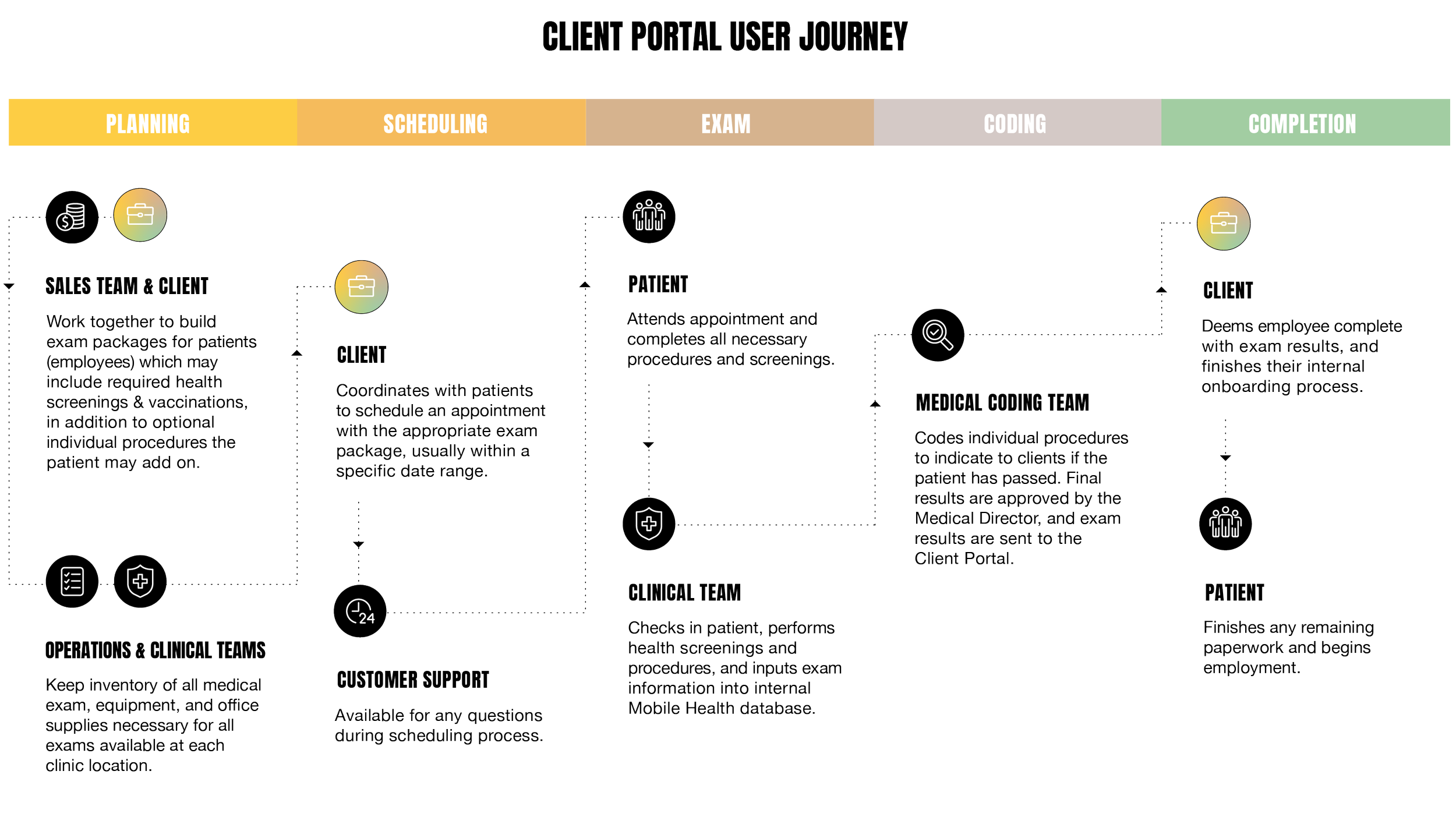
The following diagram maps the end-to-end journey of a client engagement — from initial exam planning through final completion — illustrating how each stakeholder's actions feed into and rely on the Client Portal at every stage.
Context
The existing client portal had accumulated significant usability debt across several areas:
Exam package creation and scheduling flow was unintuitive and error-prone.
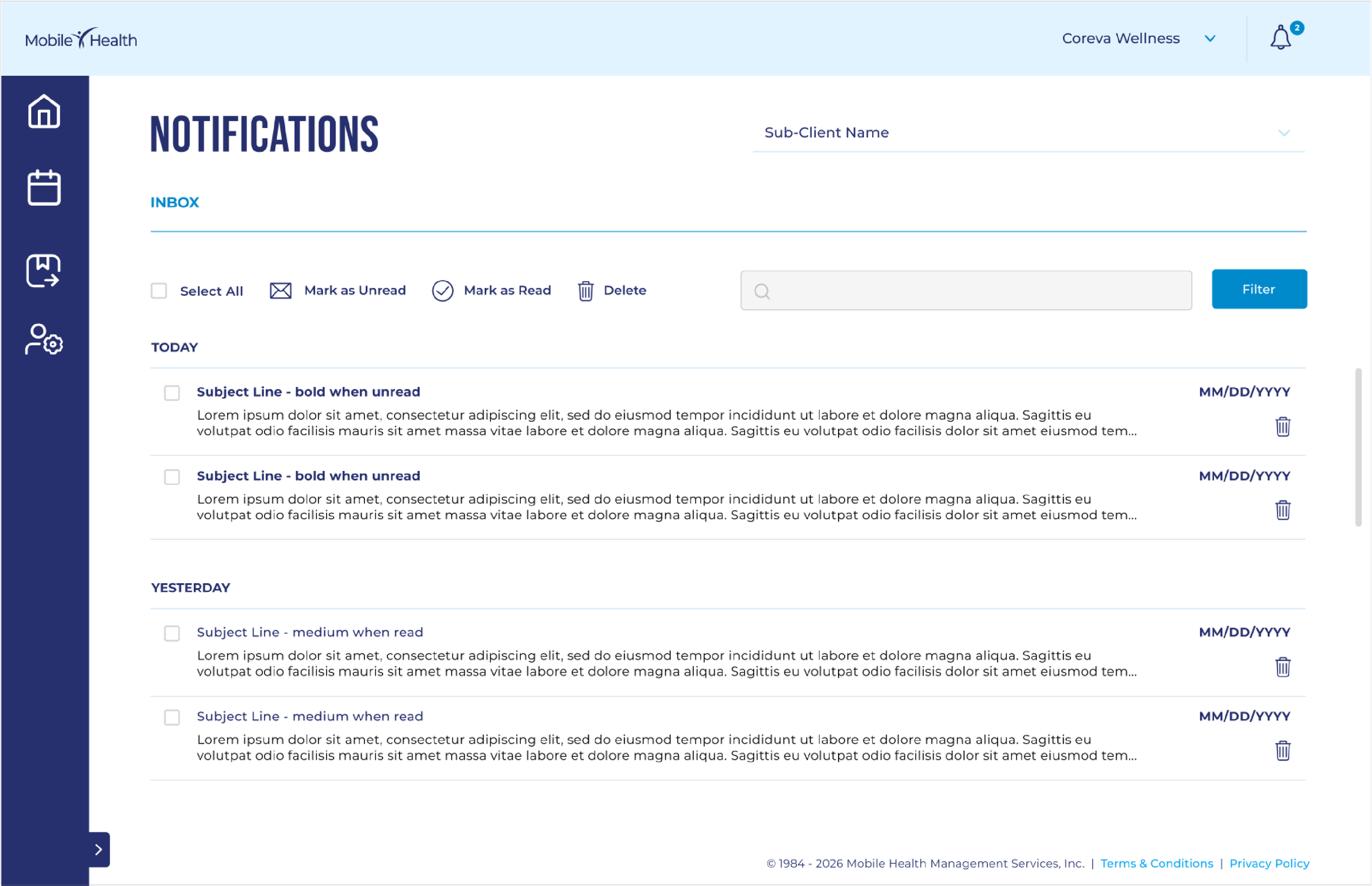
Exam results notification center lacked visual hierarchy and filtering capabilities, making it difficult to parse at a glance.
The Client portal's scheduling experience was entirely inconsistent with the patient portal, preventing clients from effectively guiding their employees through the process.
These friction points had cascading effects: patients were over-reliant on clients for support, and clients were over-reliant on Mobile Health's internal customer service and sales teams — creating inefficiencies and unnecessary burden across all user groups.
Problem
Research began with structured interviews with internal customer support and sales teams, who served as proxies for direct client feedback. Key themes emerged around three primary needs:
A redesigned exam results center with robust filtering and sorting options.
A scheduling flow that more closely mirrored the patient portal, enabling clients to better support their employees.
A clinic alerts section surfacing real-time updates on closures, hours changes, and other operational notices.
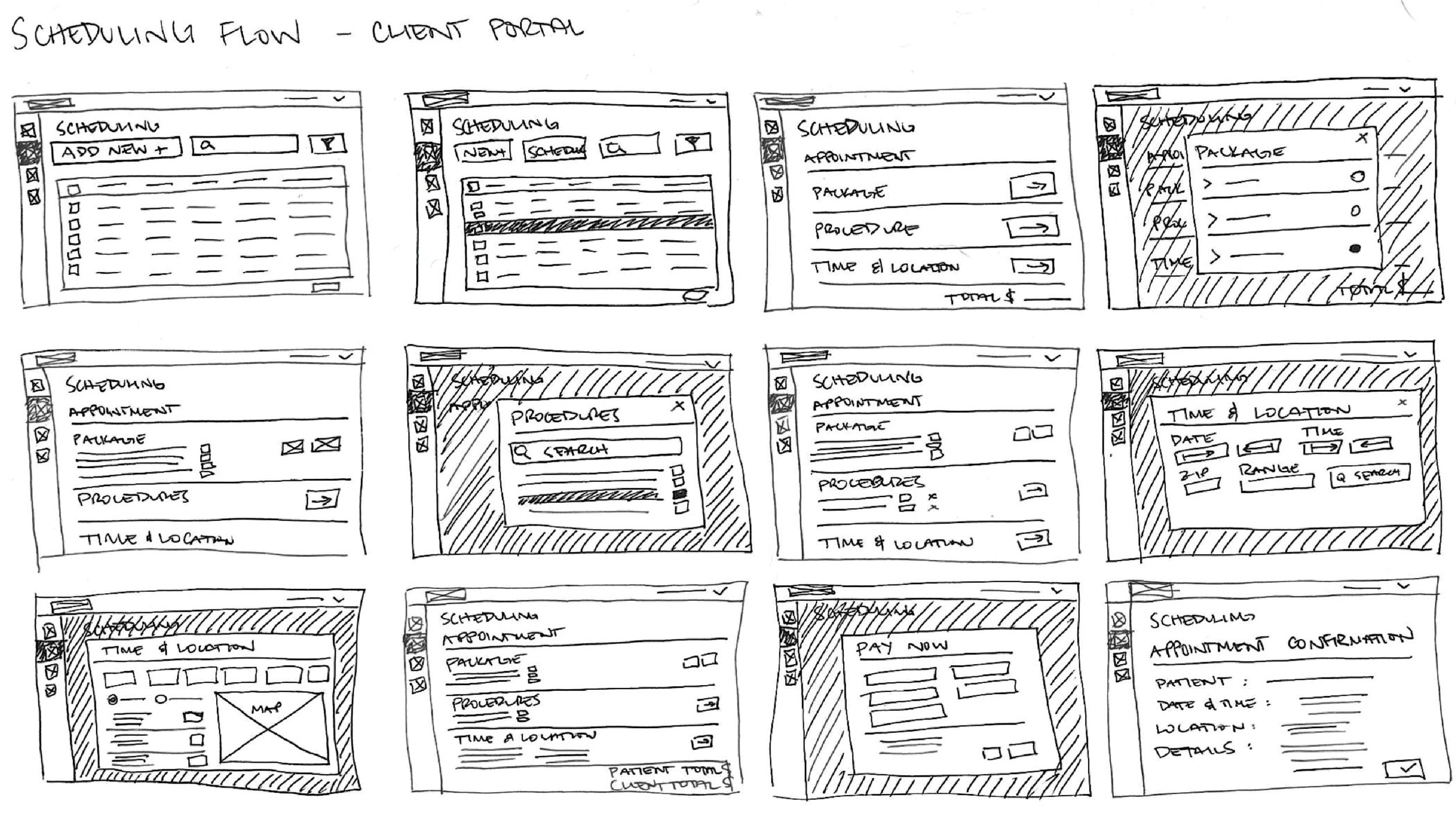
Throughout sketching and wireframing, I engaged stakeholders iteratively to validate site architecture, user flows, and feature placement — ensuring alignment before progressing to higher fidelity.
Process
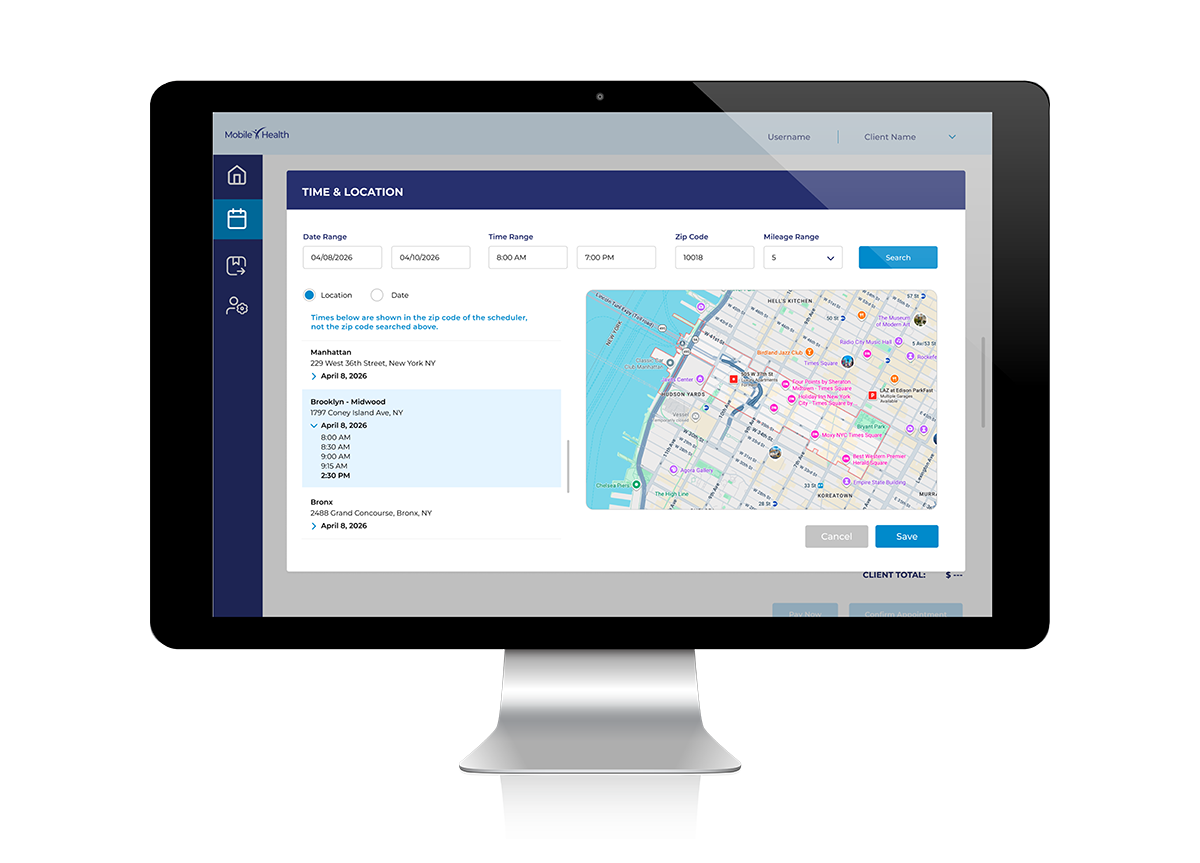
I redesigned the portal within established brand guidelines, with a clear focus on centering the workflows clients use most. Rarely-used features were removed or deprioritized, while core functionality — results notifications, exam status tracking, and scheduling — was consolidated and highlighted. The result was a portal better aligned with how clients actually work, supporting faster employee onboarding with less friction.
Results
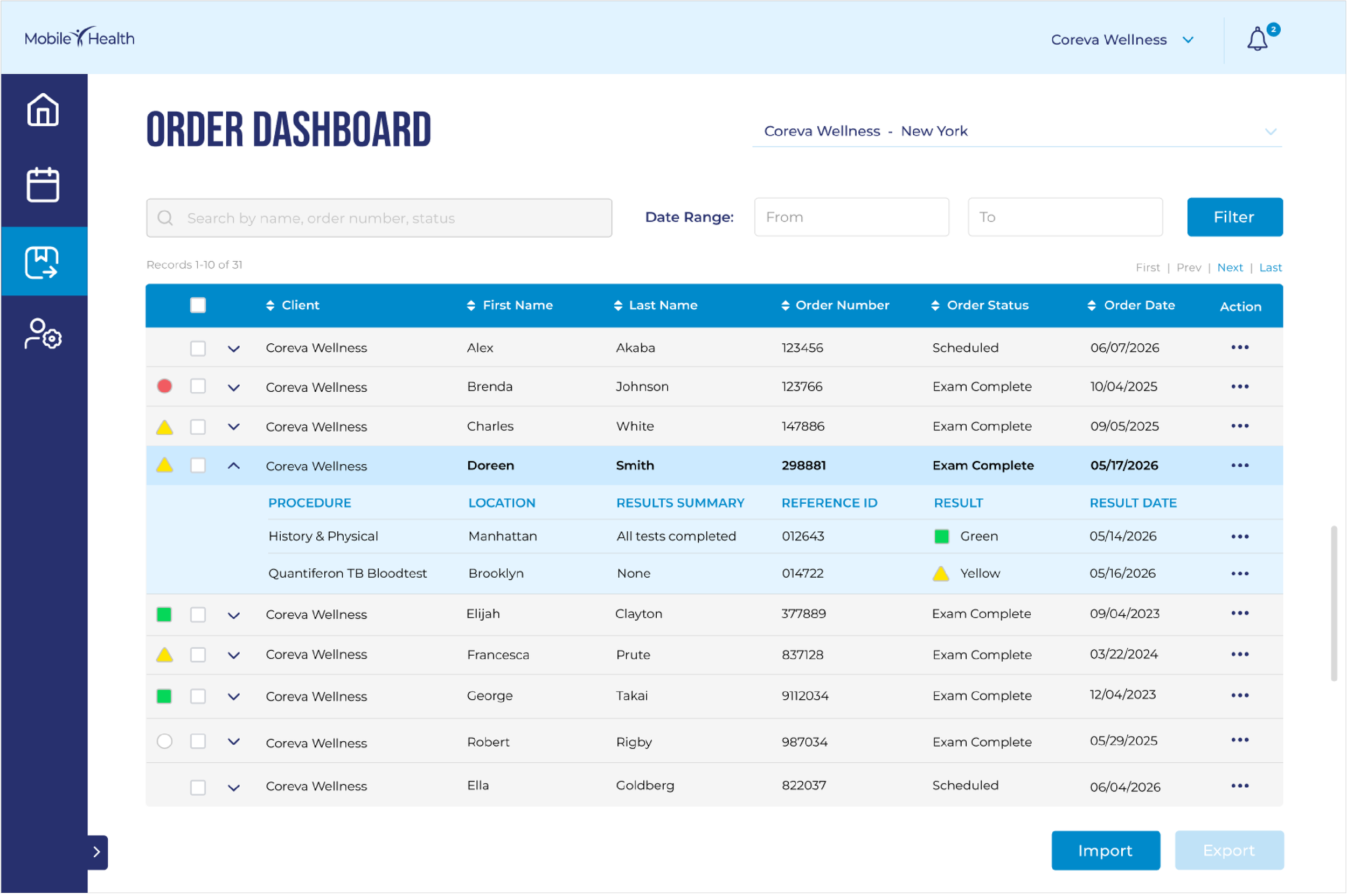
I redesigned the exam status center with visual hierarchy, expanded filtering options, and most important patient and exam information readily available in columns or dropdowns.
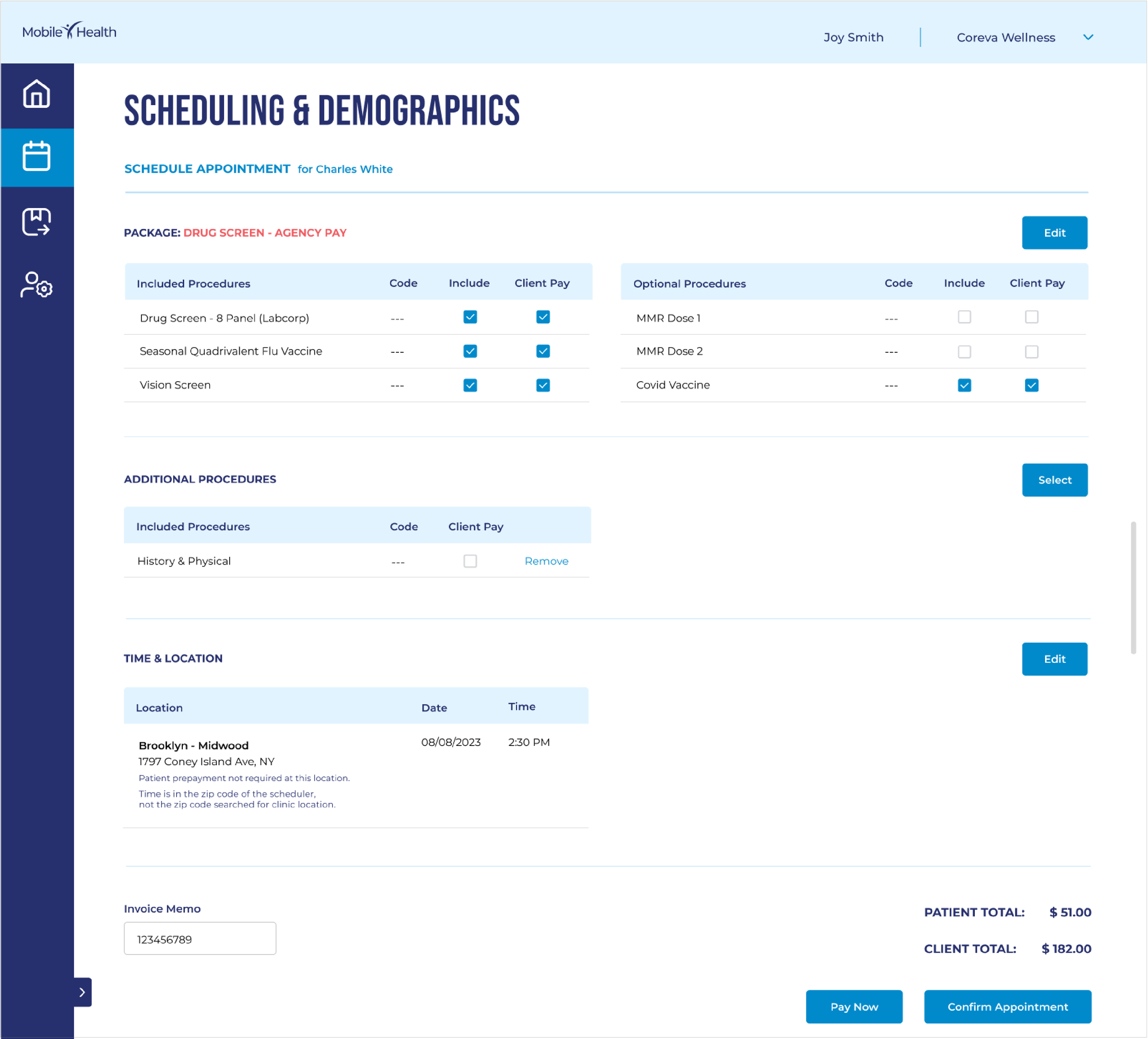
New scheduling flow that closely mirrored the Patient Portal flow, with clearly labeled sections with package and appointment information.
Results notifications center with visual hierarchy, detailed subject lines and email preview for quick readability, and expanded filtering options.
Reflection
This project deepened my understanding of how clients structure employee exam packages and the need for flexibility based on individual patient requirements — context that proved directly valuable for the next initiative: a large-scale internal portal used across clinical staff, the medical director's team, the customer support team, and the sales organization.
The most significant constraint on this project was the lack of direct client access. Without the ability to shadow workflows or conduct first-party interviews, all qualitative insight was filtered through the sales team. Budget limitations also precluded access to usage analytics, leaving key behavioral questions unanswered. In future projects, I would prioritize direct user research and quantitative data collection from the outset — both to ground design decisions in observed behavior and to establish a baseline for measuring impact post-launch.