
Onsite events Ecosystem
DESIGN STRATEGY | UX/UI DESIGN | WEB & MOBILE
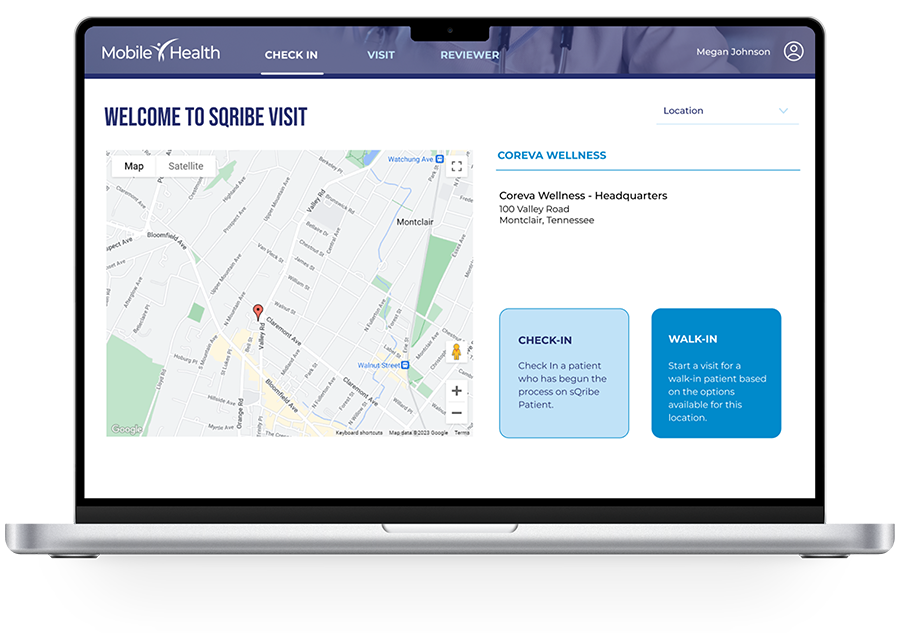
Mobile Health is an occupational healthcare company specializing in employer-mandated screening exams. Operating on a B2B2C model, the business serves three distinct user groups — employers, employees, and internal staff. A subset of clients utilized a "health fair" format, in which employees would converge on a single location over one or more days to complete their required exams in a high-volume, time-sensitive environment.
Context
Mobile Health's onsite operations and clinical staff had no unified platform to manage patient flow, track exam progress, or record results during these events. In its place, teams relied on a patchwork of online questionnaires, spreadsheets, and a rudimentary legacy database — a system that was not only inefficient, but inherently error-prone. Data entry mistakes, accidental deletions, and conflicting edits were common, creating downstream complications in the post-exam workflow: medical coding, results interpretation, and client reporting all suffered as a result.
The inefficiencies spanned the full event lifecycle — from initial client intake and logistics planning, to real-time patient throughput at clinical stations, to final reporting back to employer clients. The absence of a purpose-built solution had consequences for staff productivity, client satisfaction, and the company's ability to scale this service offering.
Problem
My approach began with extensive discovery. I conducted shadow-sessions and in-depth interviews with the operations and clinical staff who would work directly within the platform, the medical team responsible for interpreting and coding exam results, and who would ultimately deliver reporting through the Admin portal. This cross-functional research was essential to understanding not just individual pain points, but the interdependencies between each user group — and where breakdowns in one workflow created friction across others.
A central part of my role, beyond visual design and user research, was to help build the strategic vision for how three separate interfaces — sQribe Visit, sQribe Patient, and sQribe Admin — would function as one cohesive, interconnected system.
Key questions guided this systems-level thinking:
How were users currently organizing their processes in ways that were working for them, and how could we mirror and improve upon that logic in a more structured environment?
What were the functional gaps their current tools couldn't address?
What were the highest-impact pain points across the entire event lifecycle — from receiving a client request, to managing station capacity, to post-event coding and wrap-up?
By mapping the full operational journey and identifying the handoff points between user groups, I was able to design with the entire ecosystem in mind — not just individual screens.
Process
The outcome was a multi-portal design system with purpose-built experiences for each user type, all architected to support one another and reduce friction at every stage of the health fair workflow.
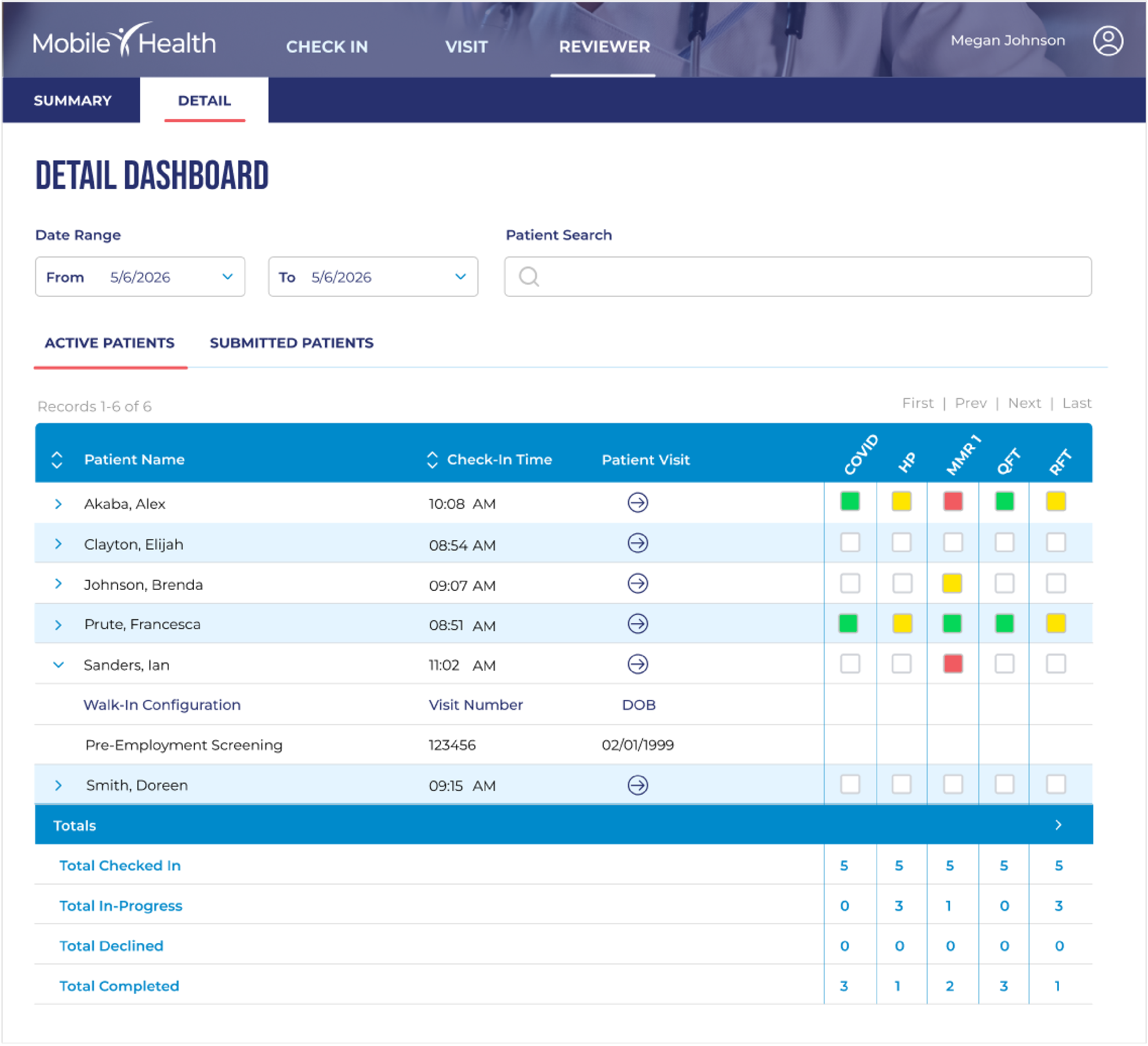
sQribe Visit was the most operationally complex of the three. Designed for onsite operations and clinical staff, it featured multiple detailed dashboards with robust filtering capabilities, real-time visual data to monitor patient flow and station throughput, configurable exam slot capacity, and a consolidated view of all patients and preliminary results. The design prioritized clarity and speed — giving staff the at-a-glance insight they needed to keep a high-volume event running smoothly.
Results
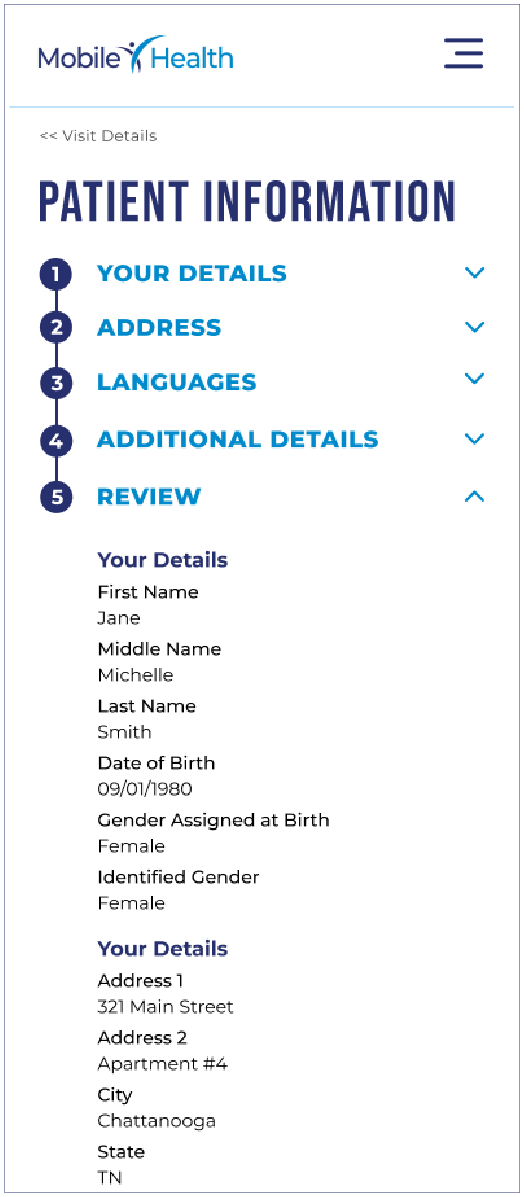
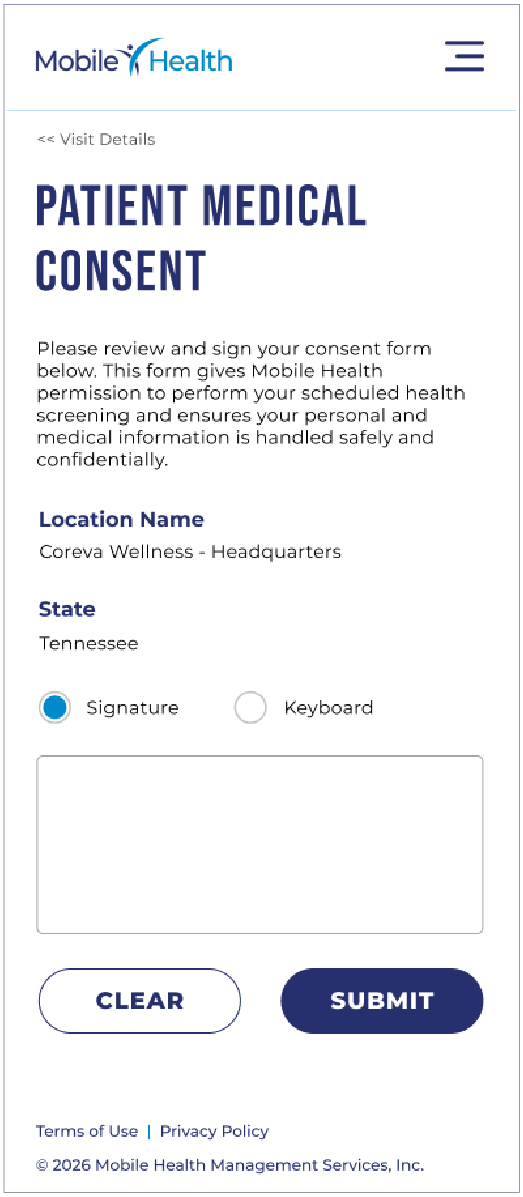
sQribe Patient was intentionally minimal. Designed to accommodate patients across a wide range of ages, accessibility needs, and English-language proficiency levels, the experience was distilled to only what was essential. The interaction flow was sequenced to mirror the patient's natural journey through the event, whether they completed intake ahead of time or on-site — reducing confusion and keeping lines moving.
Clear exam package and individual procedure options and guidance.
Detailed post-booking confirmation and exam information.
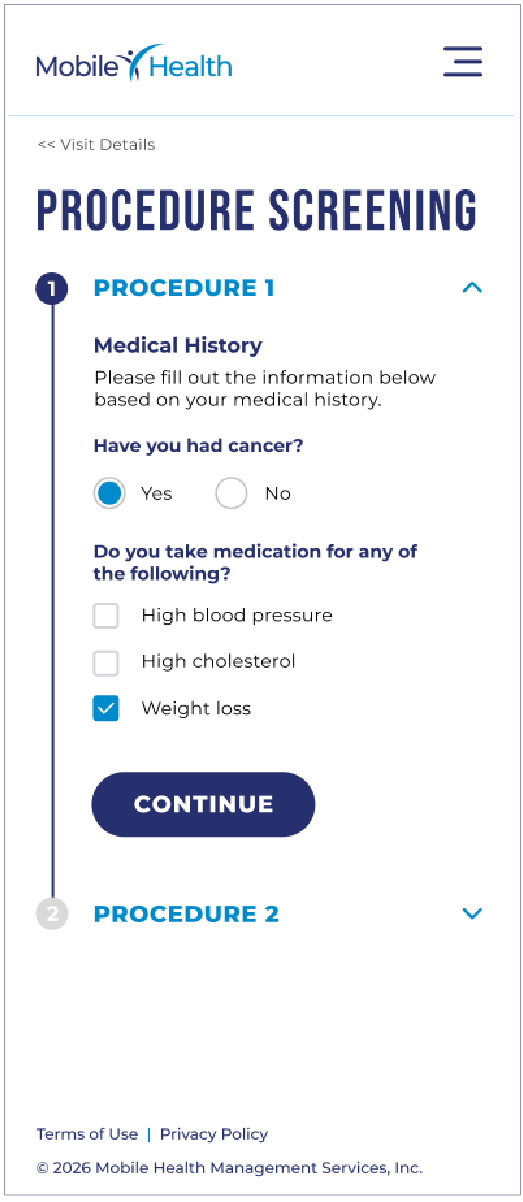
Simplified dashboard with upcoming appointment and organizational information.
Together, these three systems created a closed loop: patient data captured in sQribe Patient flowed into sQribe Visit for real-time clinical management, and was then processed and reported through sQribe Admin — reducing manual handoffs, minimizing error, and significantly accelerating the path from exam to client delivery.
sQribe Admin was integrated into Mobile Health's existing internal portal, working within an established design system. In close collaboration with the product manager and development teams, I helped build out functionality for detailed consent form tracking, onsite lab ordering, procedure and site management, and staffing coordination — connecting the back-end operational layer to the real-time data generated by Visit and Patient.
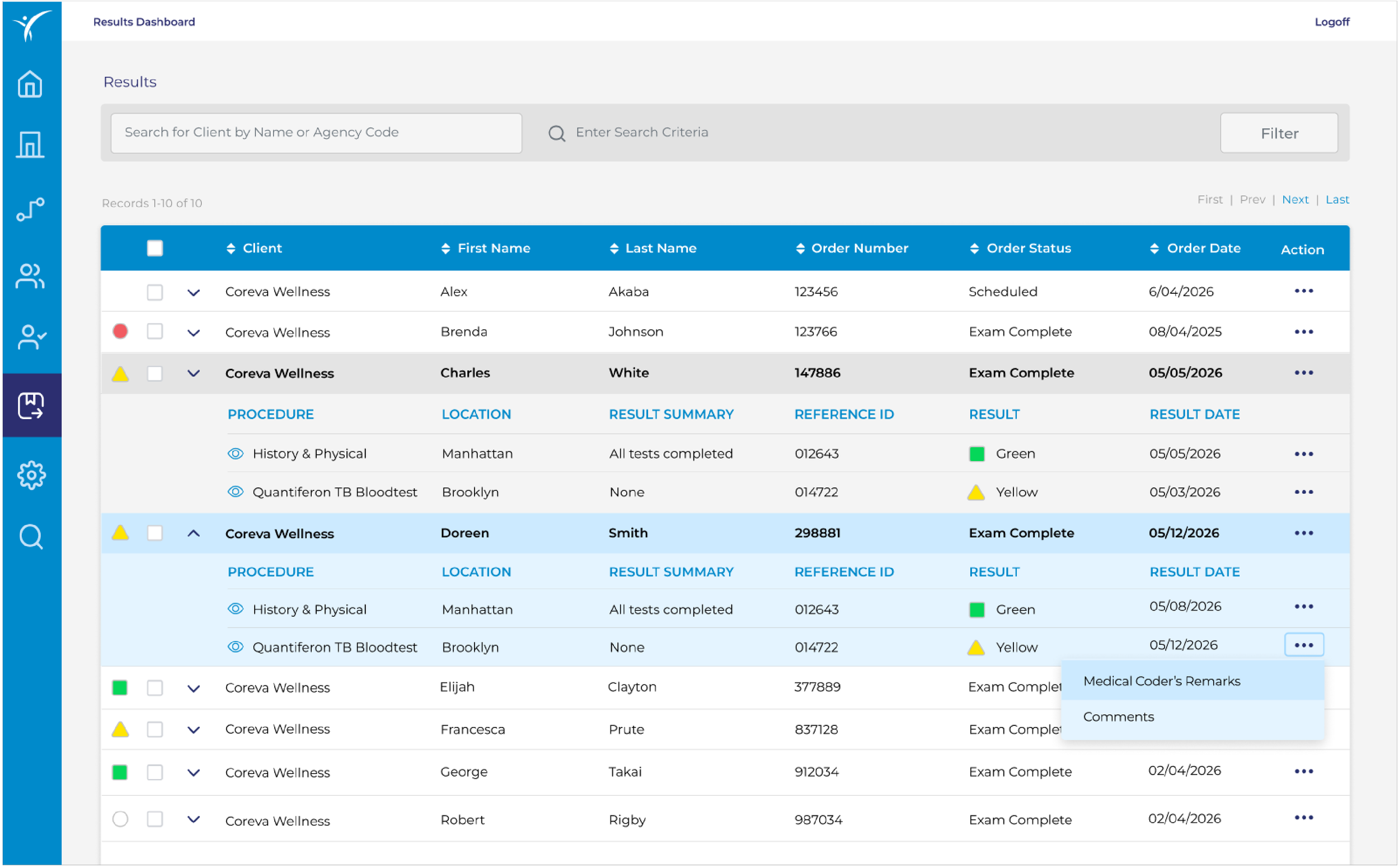
Together, these three systems created a closed loop: patient data captured in sQribe Patient flowed into sQribe Visit for real-time clinical management, and was then processed and reported through sQribe Admin — reducing manual handoffs, minimizing error, and significantly accelerating the path from exam to client delivery.
Reflection
This project stands out in my portfolio for the depth of access I had to its end users. The specificity of the user base — and the small, highly knowledgeable group of internal stakeholders — allowed for an unusually collaborative design process. I was able to spend meaningful time embedded with the operations and clinical teams, developing a granular understanding of their workflows and the real costs of the inefficiencies they were managing around.
That proximity directly informed my ability to think beyond individual product features and toward a broader strategic vision: a product ecosystem with meaningful touchpoints across nearly every user category in the business. By designing for the intersection of all three portals — rather than treating each in isolation — the work created compounding value. Internal staff gained time and clarity. Clients experienced faster, more organized events and more reliable reporting. Patients moved through a streamlined, lower-friction experience. And at the business level, the platform reduced operational overhead, improved service quality, and strengthened Mobile Health's ability to grow and scale its health fair offering — translating directly to bottom-line impact.